

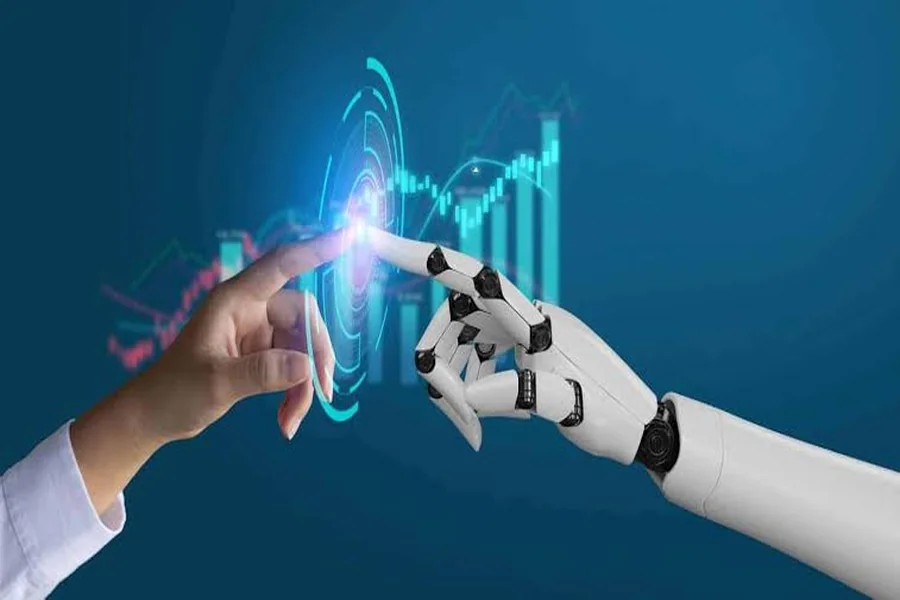
Artificial intelligence is changing the way businesses operate every day. Companies of every size are finding new ways to improve productivity reduce repetitive work and deliver better customer experiences. One of the biggest reasons for this transformation is AI for business automation. It allows businesses to automate routine tasks improve decision making and help employees focus on work that creates more value.
Small businesses startups and large organizations are all using AI powered tools to simplify their daily operations. Whether it is managing customer support processing invoices creating reports or analyzing sales data AI has become an essential part of modern business success.
Understanding how AI for business automation works can help business owners make smarter technology decisions and stay competitive in a rapidly changing market.
What Is AI for Business Automation
AI for business automation refers to the use of artificial intelligence technologies to perform tasks that normally require human effort. Unlike traditional automation AI systems can learn from data recognize patterns and improve their performance over time.
Businesses use AI to automate customer service scheduling document processing marketing campaigns inventory management and many other activities. Instead of following only fixed instructions AI can adapt to changing situations and provide better results.
Modern AI solutions often combine machine learning natural language processing and predictive analytics to support business operations. These technologies help organizations become more efficient while reducing manual work.
Why Businesses Are Adopting AI Automation
Companies are investing in AI because it improves efficiency without increasing workload. Employees no longer need to spend hours on repetitive administrative tasks. Instead they can focus on solving problems building customer relationships and growing the business.
Another important reason is speed. AI systems can process information much faster than humans. This allows businesses to respond quickly to customer requests and changing market conditions.
Cost savings also play a major role. Automating repetitive work reduces operational expenses while improving overall productivity.
Businesses also appreciate the consistency provided by AI. Automated systems perform tasks using the same standards every time which reduces mistakes and improves quality.
Key Benefits of AI for Business Automation
AI for business automation offers many practical advantages for organizations across different industries.
One major benefit is higher productivity. Automated systems complete routine tasks quickly allowing employees to spend more time on creative and strategic work.
Improved accuracy is another advantage. AI reduces human errors in data entry reporting calculations and document management.
Customer service also becomes stronger. AI powered chatbots and virtual assistants can answer common questions provide instant support and remain available throughout the day.
Businesses gain better insights because AI analyzes large amounts of data and identifies useful trends. Managers can make more informed decisions based on real information instead of assumptions.
Scalability is another important benefit. As businesses grow AI systems can handle larger workloads without requiring a similar increase in staffing.
Common Business Tasks That AI Can Automate
Many business activities can be improved through AI automation.
Customer support is one of the most popular applications. AI assistants answer frequently asked questions manage support tickets and guide customers through simple processes.
Marketing teams use AI to create content personalize email campaigns analyze customer behavior and schedule social media posts.
Finance departments automate invoice processing expense tracking fraud detection and financial reporting.
Human resources teams use AI to screen resumes schedule interviews answer employee questions and manage onboarding activities.
Sales departments benefit from AI by scoring leads predicting customer needs and generating personalized recommendations.
Inventory management also becomes more efficient through AI forecasting and automated stock monitoring.
These examples show how AI supports nearly every department within a business.
How to Successfully Implement AI Automation
Successful implementation starts with identifying repetitive tasks that consume valuable employee time. Businesses should focus on processes that have clear rules and produce measurable results.
Choosing the right software is equally important. Companies should compare available features security options customer support and integration capabilities before making a decision.
Employee training also plays a critical role. Staff members should understand how AI tools work and how they can improve daily responsibilities instead of replacing human expertise.
Businesses should begin with small projects before expanding automation across multiple departments. This approach allows organizations to measure results identify improvements and reduce implementation risks.
Regular monitoring helps ensure AI systems continue performing accurately as business needs evolve.
Challenges Businesses Should Consider
Although AI provides many advantages it also presents several challenges.
Initial implementation costs may be significant depending on the complexity of the solution. However many organizations recover these investments through improved efficiency over time.
Data quality is another important factor. AI performs best when trained with accurate complete and relevant information.
Privacy and cybersecurity must remain priorities. Businesses should protect customer data and follow applicable regulations when using AI systems.
Another challenge is employee adaptation. Some workers may hesitate to trust new technology. Clear communication proper training and ongoing support help reduce resistance and encourage successful adoption.
Finally businesses should remember that AI supports human decision making rather than replacing professional judgment in every situation.
The Future of AI for Business Automation
The future of AI for business automation looks promising. AI systems are becoming more intelligent more reliable and easier to use. Even small businesses now have access to affordable automation tools that were once available only to large corporations.
Future developments will likely include stronger predictive capabilities better natural language understanding and deeper integration with everyday business software.
Businesses will also benefit from AI agents that manage complete workflows instead of handling only individual tasks. This will further improve efficiency while allowing employees to focus on innovation customer relationships and long term growth.
Organizations that begin adopting AI today will be better prepared for future changes in technology and customer expectations.
Final Thought
AI for business automation is no longer a technology reserved for large enterprises. It has become a practical solution for businesses of every size that want to improve productivity reduce costs and deliver better customer experiences.
The most successful companies use AI to support their employees rather than replace them. By combining human creativity with intelligent automation businesses can achieve stronger performance and sustainable growth. As AI technology continues to evolve organizations that embrace automation will gain greater flexibility efficiency and long term competitive advantages.
FAQs About AI for Business Automation
- What is AI for business automation?
AI for business automation uses artificial intelligence to automate repetitive business tasks improve efficiency and support better decision making.
- Which businesses benefit most from AI automation?
Businesses of all sizes including retail healthcare finance manufacturing education and professional services can benefit from AI automation.
- Can small businesses afford AI automation?
Yes. Many AI tools offer affordable subscription plans and free versions that are suitable for small businesses.
- Does AI replace employees?
No. AI is designed to automate repetitive work while allowing employees to focus on creative strategic and customer focused responsibilities.
- How can a business start using AI automation?
Businesses should begin by identifying repetitive tasks selecting reliable AI tools training employees and gradually expanding automation based on measurable results.
