


Introduction
AI Innovations Transforming Modern Healthcare is changing how doctors nurses and hospitals work in 2026. Healthcare systems around the world are under pressure due to rising patient numbers and limited medical resources. Artificial intelligence is helping solve many of these problems by making care faster more accurate and more accessible. It supports doctors in decision making improves patient outcomes and reduces workload in hospitals. AI is not replacing healthcare professionals. It is becoming a powerful assistant that improves every stage of care from diagnosis to recovery. In modern healthcare AI is now part of everyday medical practice and it continues to grow rapidly.
AI in Medical Diagnosis and Early Detection
One of the biggest contributions of AI in healthcare is early disease detection. AI systems can analyze medical images like X rays CT scans and MRIs with high accuracy. These systems can detect patterns that are sometimes difficult for the human eye to see. This helps in identifying diseases such as cancer heart conditions and neurological disorders at an early stage. Early detection increases the chances of successful treatment and saves lives.
AI powered diagnostic tools are also used in routine checkups. They can quickly analyze blood tests and patient history to highlight possible health risks. Doctors use this information to make faster and more informed decisions. In many hospitals AI systems are helping reduce diagnostic errors which is one of the major challenges in healthcare.
Another important development is AI based symptom checkers. Patients can enter their symptoms into digital platforms and receive possible explanations. While these tools do not replace doctors they help guide patients to seek the right care at the right time. This reduces unnecessary hospital visits and improves efficiency in the healthcare system.
AI in Drug Discovery and Medical Research
Drug discovery has always been a long and expensive process. AI is now changing that by speeding up research and reducing costs. Machine learning models can analyze massive amounts of biological data to identify potential drug compounds in a short time. This helps researchers focus on the most promising solutions instead of testing thousands of random combinations.
AI also helps in understanding diseases at a deeper level. It can analyze genetic data and identify how diseases develop in the human body. This information is useful for creating personalized treatments that match a patient’s genetic profile. Personalized medicine is becoming more common because of AI driven research.
Clinical trials are also becoming more efficient. AI can help select suitable participants based on medical history and conditions. It can also monitor trial results in real time and detect patterns that improve safety and effectiveness. This reduces delays and makes new treatments available faster to patients who need them.
In recent years AI has played a major role in vaccine development and treatment research. It has helped scientists respond quickly to global health challenges by analyzing data at a speed that humans alone cannot achieve.
AI in Patient Monitoring and Personalized Care
Patient monitoring is another area where AI is making a big difference. Wearable devices like smart watches and health trackers collect real time data about heart rate sleep patterns oxygen levels and physical activity. AI analyzes this data to detect any unusual changes in health conditions.
For patients with chronic illnesses AI systems provide continuous monitoring. This helps doctors track patient progress without requiring constant hospital visits. It is especially useful for people with diabetes heart disease and respiratory conditions. Early alerts from AI systems can prevent serious health emergencies.
Personalized care is also improving due to AI. Every patient is different and AI helps create treatment plans based on individual needs. It considers medical history lifestyle and genetic factors to suggest the best care options. This improves treatment success rates and reduces side effects.
AI powered virtual assistants are also being used in healthcare. They can remind patients to take medication schedule appointments and provide basic health advice. These tools improve patient engagement and make healthcare more accessible especially in remote areas.
Hospitals are also using AI to predict patient admission rates. This helps manage staff and resources more efficiently. It ensures that hospitals are prepared for busy periods and emergencies.
AI in Robotic Surgery and Advanced Treatment
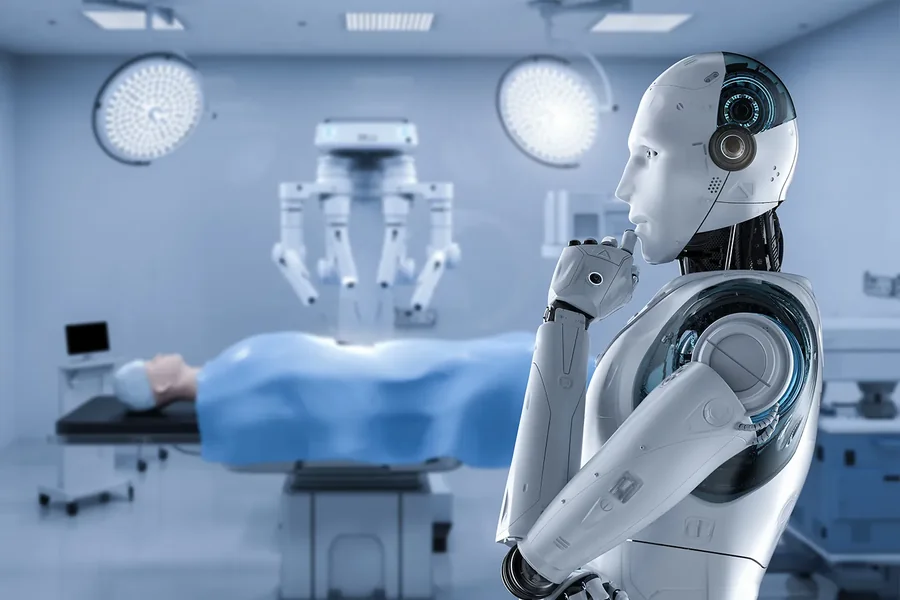
Robotic surgery is one of the most advanced uses of AI in healthcare. AI assisted robots help surgeons perform complex procedures with high precision. These systems can make smaller incisions reduce blood loss and speed up recovery time for patients.
Surgeons control robotic systems while AI provides real time guidance. It analyzes the surgical field and suggests precise movements. This reduces human error and improves surgical outcomes. In delicate surgeries such as brain or heart operations AI support is extremely valuable.
AI is also used in radiation therapy for cancer treatment. It helps target cancer cells more accurately while protecting healthy tissues. This improves treatment effectiveness and reduces side effects for patients.
Rehabilitation is another area where AI is being used. Smart devices and AI powered therapy systems help patients recover faster after surgery or injury. They track progress and adjust exercises based on patient performance.
In emergency care AI systems can quickly analyze patient conditions and recommend immediate treatment steps. This is especially useful in critical situations where every second matters.
AI in Hospital Management and Healthcare Efficiency
Healthcare is not only about treatment. It also involves management of hospitals staff and resources. AI is improving efficiency in these areas by automating administrative tasks.
AI systems can handle appointment scheduling billing and patient record management. This reduces paperwork and allows medical staff to focus more on patient care. It also reduces waiting times and improves hospital workflow.
Predictive analytics helps hospitals manage resources better. AI can forecast patient inflow and suggest how many doctors nurses and beds will be needed. This helps avoid overcrowding and ensures smooth operation.
AI is also improving medical record systems. Digital health records powered by AI allow doctors to access patient history quickly and accurately. This reduces delays in treatment and improves coordination between departments.
In addition AI is helping reduce healthcare costs. By improving efficiency reducing errors and preventing unnecessary treatments hospitals can save significant resources. These savings can then be used to improve patient services.
Cybersecurity in healthcare is another important area. AI helps protect sensitive patient data by detecting unusual activities and preventing cyber attacks. This ensures privacy and builds trust in digital healthcare systems.
Final Thought
AI Innovations Transforming Modern Healthcare is reshaping the entire medical industry in powerful ways. From early diagnosis to robotic surgery AI is improving accuracy speed and accessibility in healthcare systems. It helps doctors make better decisions supports patients with personalized care and improves hospital management.
The future of healthcare will be deeply connected with artificial intelligence. However human expertise will always remain essential. AI is a tool that enhances medical practice not a replacement for professionals. The combination of human skill and machine intelligence is creating a stronger and more efficient healthcare system.
As technology continues to evolve healthcare will become more predictive personalized and preventive. AI will play a key role in making medical care faster safer and more affordable for everyone.
